
PM Dhan-Dhaanya Krishi Yojana 2025: A Game-Changer for Indian Agriculture
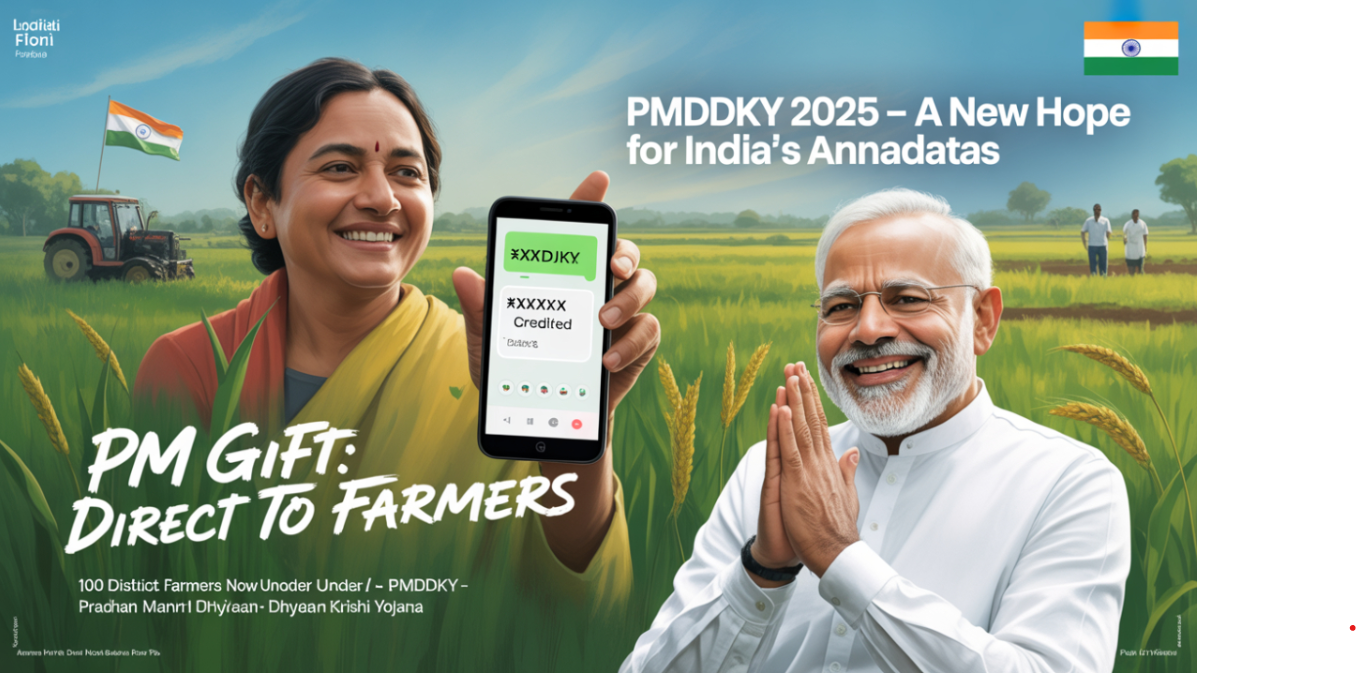
The Prime Minister Dhan-Dhaanya Krishi Yojana (PMDDKY) is a transformative Central Sector Scheme launched by the Government of India in July 2025 to revolutionize agriculture in 100 low-performing districts. With an annual budget of ₹24,000 crore and a six-year timeline, this ambitious initiative aims to empower 1.7 crore farmers by boosting productivity, promoting sustainability, and enhancing rural livelihoods. Announced in the Union Budget 2025-26, the scheme draws inspiration from NITI Aayog’s Aspirational Districts Program, focusing on modernizing agriculture and allied sectors. Here’s an in-depth look at PM Dhan-Dhaanya Krishi Yojana 2025, its objectives, benefits, and impact on Indian farming.
What is PM Dhan-Dhaanya Krishi Yojana?

The PM Dhan-Dhaanya Krishi Yojana 2025 is a flagship program designed to address critical challenges in Indian agriculture, such as low productivity, inadequate irrigation, and post-harvest losses. By targeting 100 districts with below-average agricultural performance, the scheme integrates 36 existing central schemes across 11 ministries, state initiatives, and private partnerships to create a cohesive strategy for rural prosperity. With a focus on technology, sustainability, and financial inclusion, PM Dhan-Dhaanya Krishi Yojana 2025 aligns with India’s vision of Atmanirbhar Bharat (self-reliant India).
Key Objectives of PMDDKY 2025
1. Boost Agricultural Productivity: Increase crop yields through modern farming techniques, scientific practices, and optimized land use. India’s rice yield, for instance, lags at 2,191 kg/ha compared to the global average of 3,026 kg/ha.
2. Promote Crop Diversification: Encourage cultivation of climate-resilient, high-value crops like pulses, millets, and vegetables to ensure income stability.
3. Strengthen Infrastructure: Develop storage and processing facilities at the panchayat and block levels to reduce post-harvest losses, currently at 35-40% for perishables.
4. Enhance Irrigation Access: Expand irrigation networks and promote efficient methods like drip and sprinkler systems to reduce dependence on rainfed agriculture (55% of farmland).
5. Improve Credit Access: Facilitate affordable loans for small and marginal farmers, only 20% of whom currently access institutional credit.
6. Foster Sustainability: Promote organic farming, water conservation, and soil health for long-term agricultural resilience.
Key Features of the Scheme
The PMDDKY 2025 is built on a robust framework to ensure effective implementation and measurable outcomes. Here are its standout features:
1. Targeted Coverage: Focuses on 100 districts selected based on low productivity, moderate cropping intensity (national average: 155% in 2021-22), and limited credit access. At least one district per state/UT is included, with allocations proportional to cropped area and operational holdings.
2. Convergence Model: Integrates 36 central schemes (e.g., PMKSY, PMFBY, RKVY) with state schemes and private partnerships for efficient resource utilization.
3. Implementation Structure:
- District Dhan-Dhaanya Samiti: The District Dhan-Dhaanya Samiti is a friendly team made up of officials, experts, and progressive farmers who work together to craft personalized agricultural plans just for our community.
- State and National Committees: Provide oversight and strategic direction.
- Monitoring: Tracks 117 Key Performance Indicators (KPIs) monthly via a NITI Aayog dashboard, with Central Nodal Officers ensuring accountability.
4. Technology-Driven Approach: Leverages GIS mapping, AI-based advisories, and sensor-based monitoring to enhance efficiency.
5.Financial Empowerment: Introduces a Grameen Credit Score for farmers and Self-Help Groups to improve loan accessibility.
6. Special Initiatives:
- Aatmanirbharta in Pulses: Aatmanirbharta in Pulses is a six-year program to help us become self-sufficient in growing pulses like Tur, Urad, and Masoor. The plan includes using seeds that can withstand climate changes and ensuring that NAFED and NCCF will buy the crops from farmers.
- Vegetable and Fruit Production: Supports production, supply chains, and processing, with a focus on millets for nutrition.
- Farmer Producer Organizations (FPOs): Farmer Producer Organizations (FPOs) aim to enhance the strength of FPOs and cooperatives to facilitate improved access to markets for farmers.
Eligibility and Application Process
To participate in PMDDKY, farmers and agri-entrepreneurs must meet the following criteria:
- Reside in one of the 100 selected districts.
- Be actively engaged in agriculture or allied activities.
- You must have a valid Aadhaar and an active bank account.
How to Apply
1. Register on the official PMDDKY portal (details to be announced; check pmkisan.gov.in http://pmkisan.gov.in or district agriculture offices for updates).
2. Submit Aadhaar and bank account details.
3. Applications are verified by the District Dhan-Dhaanya Samiti for eligibility and scheme benefits.
Benefits of PM Dhan-Dhaanya Krishi Yojana
The PMDDKY 2025 offers a range of benefits to transform agriculture and uplift rural communities:
- Higher Yields and Income: Scientific farming and district-specific plans boost crop productivity and farmer earnings.
- Improved Infrastructure: Enhanced irrigation and storage facilities reduce post-harvest losses and ensure better market access.
- Financial Inclusion: Affordable credit access empowers small and marginal farmers to invest in modern techniques.
- Job Creation: Generates employment in agriculture, food processing, and allied sectors, reducing rural migration.
- Sustainability: Promotes eco-friendly practices like organic farming and water conservation for long-term resilience.
- Rural Entrepreneurship: Supports FPOs and cooperatives, fostering local business opportunities.
Challenges to Overcome
While PMDDKY holds immense potential, it faces certain challenges:
- Fund Utilization: Delays in fund allocation, with 50% of funds often underutilized due to procedural bottlenecks.
- Infrastructure Gaps: Remote districts lack adequate storage, transportation, and irrigation systems.
- Farmer Awareness: Limited financial literacy (only 30% of farmers use formal credit) may hinder participation.
- Climate Risks: Increasing rainfall variability (projected to rise 15-20% by 2050) threatens crop stability.
- State Variations: Inconsistent implementation due to governance and resource disparities across states.
Expected Impact
The PMDDKY 2025 is set to transform Indian agriculture by:
- Driving agricultural growth and rural prosperity, aligning with Atmanirbhar Bharat.
- Improving national agricultural indicators as the 100 districts advance.
- Enhancing food security and reducing import dependence for pulses and oilseeds.
- Establishing sustainable livelihoods while reducing rural unemployment and preventing migration.
Districts Covered
The list of 100 districts is yet to be officially released by the Ministry of Agriculture & Farmers Welfare. It will prioritize districts with low productivity, moderate cropping intensity, and limited credit flow, ensuring representation from every state and Union Territory.
Conclusion
The PM Dhan-Dhaanya Krishi Yojana 2025 is a game-changer for Indian agriculture, offering a holistic approach to address longstanding challenges. By integrating technology, financial inclusion, and sustainable practices, it empowers farmers to achieve higher yields, better incomes, and resilient livelihoods. As the scheme rolls out, it promises to transform 100 districts into models of agricultural excellence, paving the way for a self-reliant and prosperous rural India.
For the latest updates, visit official government portals like pib.gov.in or pmkisan.gov.in. Stay tuned for the district list and application details to unlock the benefits of this visionary scheme. https://newszone18.com/